
Art Of Love, Sarajevo Winter 2011
Posted: February 5, 2011 Filed under: INFO/ARCHIVE Leave a comment

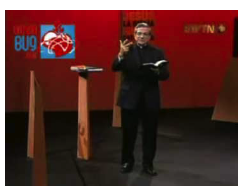 TRINIDAD (2010) 7’23’’
ROBERTO EQUISOAIN (PAMPLONA, 1973)
/COLLAGE/
It is a collection of fragments of TV
commercials, series, programs and gay
porno films which are linked to the
number three. Together with this, some
texts about trinity by the mystic Angelus Silesius.
Selection of contemporary Spanish short and experimental film
SESSION 2
10.2.2011 Academy of Performing Arts (House of Culture Center)
http://www.ellenjames.net/index.php
arbor inversa/21st January/Photo-Video Exhibition/Galerie ZeitZone
Posted: January 4, 2011 Filed under: FILM/VIDEO, INFO/ARCHIVE, PHOTO Leave a comment
Vernissage: Friday, 21st January 2011, 19:00
Roberto Equisoain: arbor inversa
Galerie ZeitZone, Adalbertstr. 79, 10997 Berlin Kreuzberg
January 21 – February 02, 2011
arbor inversa
Trees and rivers:
10 photographs of inverted trees with their crowns upside down.
3 video pieces of rivers whose water flows upwards, to its source.
1 fake painting with tree and river in a golden frame.
Then the Angel brought me to the center of the plane in which we were. There there was a tree whose roots were in the open air and the crown below and which had a lot of branches. Among the inferior branches of the crown, the first one was faith.
Hadewijch, Visions
Inverted trees appear in the Hebrew cabala and in Hindu and Christian iconography representing God’s wisdom and virtues. In 13th century, Hadewijch of Antwerp, in full ecstasy in the first of her visions, describes how an angel brings her to a garden in whose center is an inverted tree. It is the tree of the knowledge of God.
This exhibition consists of a series of portraits of mystic trees. They are absolutely normal trees, which only through a particular kind of attention are transformed into sacred ones. As Georges Perec suggests, a infraordinary reality leads to a extraordinary one when it is carefully observed. In this exhibition the mechanism that allows for this transformation is very simple: to turn them. Nevertheless, this simple operation implies something more than a mere perceptual change: it also indicates a rebel attitude: a basic and legitimate protest of reversing (and subverting) the real through searching its unforeseen, playful and critical dimensions.
This inversion of coordinates is a very simple action, but with far reaching consequences. Trying to mitigate an excessive scientism that abandons a human dimension in our perception and study of world, the philosopher Edmund Husserl in The Originary Ark, the ‘Earth,’ Does Not Move (1934) inverses the Copernican revolution: the earth does not turn around the sun, bur rather is again back under man’s feet as his essential geographical reference. In the photographs of this exhibition a new inversion literally takes place (the floor is up), this time with the aim of recovering something more intimately human: the supernatural, the irrational and aesthetic thinking: the relationship of man to the sacred.
But these are no more than words which, as mystics insist, don’t say anything; this text is actually superfluous.
…………………………………………………………………………………………..
arbor inversa
Árboles y ríos:
10 fotos de árboles invertidos, con la copa mirando hacia abajo.
3 vídeos de ríos cuya agua fluye hacia arriba, hacia el origen.
1 pintura falsa con río y árbol en marco dorado.
Entonces el Ángel me llevó al centro de la llanura donde estábamos. Había allí un árbol cuyas raíces estaban al aire y la copa abajo y que tenía muchas ramas. Entre las ramas inferiores, que eran las de la copa, la primera era la fe.
Hadewijch, Visiones
Los árboles invertidos aparecen en la cábala hebrea y en la iconografía religiosa india y cristiana, representando la sabiduría y cualidades de Dios. En el siglo XIII Hadewijch de Amberes, en pleno éxtasis, en la primera de sus visiones describe cómo un ángel la lleva a un jardín en cuyo centro se encuentra el árbol invertido. Es el árbol del conocimiento de Dios.
Esta exposición consiste en una serie de retratos de árboles místicos. Son árboles absolutamente normales, que sólo un determinado tipo de atención los convierte en sagrados. Como dice Georges Perec, una realidad infraordinaria conduce a lo extraordinario cuando se la observa con suficiente detenimiento. En esta exposición, lo que posibilita esa mirada transformada es un método muy sencillo: darles la vuelta. Pero esta operación tan simple conlleva algo más que un mero cambio perceptivo: también participa de una actidud contestataria; se trata de la protesta básica y legítima de invertir (y subvertir) lo real buscando lo inesperado, lo lúdico y lo crítico.
Esta inversión de las coordenadas es una acción simple, pero con unas consecuencias que se extienden mucho más allá. Intentando mitigar un excesivo cientificismo que abandona la dimensión humana en la percepción y estudio del mundo, el filósofo Edmund Husserl en El Arca originaria ‘Tierra’ no se mueve (1934) le da la vuelta a la revolución copernicana: la tierra no gira en torno al sol, sino que vuelve a estar bajo los pies del hombre como su referencia geográfica esencial. Con las fotos de esta exposición, literalmente, se da una vuelta más (el suelo está arriba) en este caso para recuperar algo todavía más esencialmente humano: lo sobrenatural, el pensamiento no racional y estético: la relación del hombre con lo sagrado.
Pero esto no son más que palabras que, como insisten los místicos, nada dicen; así que este texto en realidad sobra.


Blablablabla Blablablabla bla Blabla Bla en BELLAMATAMÁTIC … PROGRAMA 5: URBANO EN VANO
Posted: December 13, 2010 Filed under: INFO/ARCHIVE Leave a comment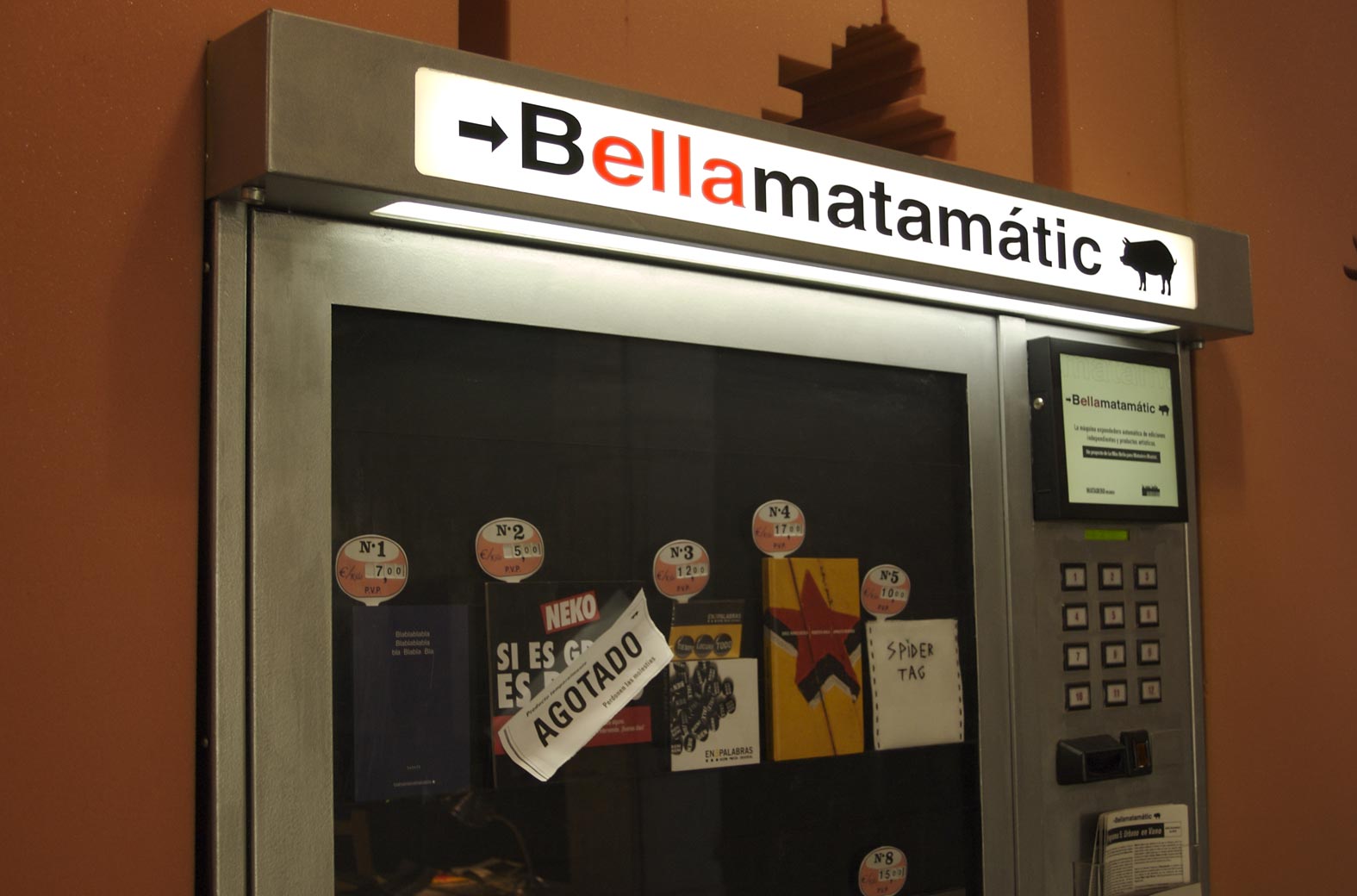
El libro Blablablabla Blablablabla bla Blabla Bla en BELLAMATAMÁTIC, la máquina expendedora de la revista experimental La Más Bella.
BELLAMATAMÁTIC, una máquina expendedora automática que recibe en el hall de entrada de MATADERO a todos los visitantes . La máquina cambia regularmente sus contenidos en virtud de Programas Temáticos propuestos por La Más Bella, que se encarga de dotar de contenidos y elaborar una programación de presentaciones y eventos en torno a la máquina.
Programa 5, Julio-Diciembre de 2010: URBANO EN VANO
Matadero – Paseo de la Chopera 14, Metro Legazpi
http://www.mataderomadrid.com/

Blablablabla Blablablabla bla Blabla Bla
Título original: Universal Declaration of Human Rights
Editorial: produccionsescopeta
Traducción y diseño: Roberto Equisoain
Primera edición: Mayo 2010.
52 páginas
ISBN: 978-84-936-3793-4
PVP: 8 €
Blablablabla Blablablabla bla Blabla Bla es la traducción de la Declaración Universal de los Derechos Humanos de 1948 al lenguaje blablablá.
La singularidad de este libro reside precisamente en que ha borrado todo rastro de singularidad, una vez que el blablablá se extiende como un virus que no se conforma con apoderarse de todo grueso del texto, sino que se expande más allá de sus márgenes, infectando también al título, el autor, la editorial o incluso el ISBN y haciéndolos desaparecer en la masa indistinguible de blablablás.
Frente a un lenguaje que en su intento de explicar la realidad lo que consigue es malentenderla o, en el mejor de los casos, simplificarla, el blablablá toma precisamente esa simplificación como punto de partida, llevándola al extremo hasta alcanzar lo ininteligible. Pero ello no significa que renuncie al sentido: como juego lúdico, el blablablá defiende la opacidad y se niega a entender el mundo, lo cual no significa que ocasiones, como en este libro, el blablablá resulte mucho más revelador acerca una cierta situación de los derechos humanos que una infinidad de discursos y palabras no han sido capaces de dar a entender.
Lo podéis encontrar en:
MADRID
Bellamatamátic, Matadero – Paseo de la Chopera 14, Metro Legazpi
Arrebato Libros – La Palma, 21 – Madrid, Metro Tribunal, Tfno: 912 821 111
BARCELONA
Laie cccb, c/ Montalegre, 5. Barcelona.
Alibri llibreria, C/Balmes, 26. Barcelona.
BERLIN
Motto Berlin – Skalitzer Str. 68, im Hinterhof 10997 Berlin (Kreuzberg)
FE (Evaporada), 2007, M.A.D.R.I.D. 28045
Posted: November 12, 2010 Filed under: INFO/ARCHIVE, URBAN INTERVENTIONS Leave a comment
FAITH (VAPORATED) The action develops in Legazpi square. While cleaning the tiles of a pavement, the artist uses water to write the word Faith. With the moistened parts becoming dry, the letters slowly disappear while pedestrians are passing. Legazpi square is one of Madrid’s main entering points, where many buses from the south of Spain arrive. Faith as an impulse for starting over in a new place. The action is a respectful one, not transmitting any aggression to its surroundings, which become visible in the video.
I see Faith as a search, a path between reason and religious superstition, a conscious innocence, a healthy craziness, an attitude, an impulse, an intuition.
FE (EVAPORADA). La acción se desarrolla en la plaza Legazpi. El artista limpia los baldosines de una acera dibujando la palabra “FE” de manera que queda escrita con la humedad del agua para desaparecer lentamente mientras pasan los peatones. La plaza de Legazpi es un lugar de entrada a Madrid al que llegan numerosos autobuses del sur . FE como impulso para comenzar en la ciudad. Se trata de una acción respetuosa, no agresiva con el entorno que se documentará en vídeo.
“Entiendo la FE como una búsqueda, un camino medio entre el entendimiento de la razón y la superstición religiosa, una inocencia consciente, una locura sana, una actitud, un impulso, una intuición”.
http://www.madrid45.net/es/home.htm
Lügen Mentiras/ 2010 ZEBRA Poetry Film Festival
Posted: October 12, 2010 Filed under: FILM/VIDEO, INFO/ARCHIVE Leave a comment LügenMentiras
Roberto Equisoain, Spanien, 2010, 6 min, Musik: Jorge Palomino, Gedicht: Lügen, Silvana Franzetti
2010 ZEBRA Poetry Film Festival
Kino Babylon (Mitte), Rosa-Luxemburg-Str. 30, 10178 Berlin
Samstag, 16.10.
20:30 Kino 3
Programm:
http://literaturwerkstatt.org/index.php?id=770
LiesLügenMentiras Finissage: 28. August 2010, ab 19:00
Posted: August 23, 2010 Filed under: INFO/ARCHIVE Leave a comment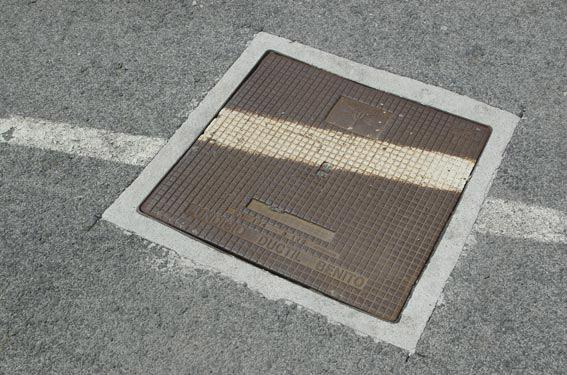 Finissage: 28. August 2010, ab 19:00
Programm (19:00 – 20:00)
4+1= 6 (Lesung/Performance Abend)
A. López Franzen / LügenMentiras (Silvana Franzetti)
Roberto Equisoain / Blablablabla Blablablabla bla Blabla Bla
Cristian Forte / Abgekürzte Poesie – Poesía abreviada
Yara Burkhalter / Belladonna, Nacho and Carol
Jesús Acevedo / Performance
GALERIE SIGUARAYA
Alejandro Villalon
Friedrichstr. 232
10969 Berlin
++49(0)1749222060
LIESLÜGENMENTIRAS, 31.7.-28.8.2010, Siguaraya Galerie, Photo installation.
Posted: June 3, 2010 Filed under: INFO/ARCHIVE, PHOTO Leave a comment 31.7.-28.8.2010
Siguaraya Galerie
Friedrichstraße 232,
10969 Berlin Mitte, Germany
http://www.siguaraya-gallery.com
These pictures are lies, traps which try to catch God.
Lies are mechanisms, constructions in which, in order to reach a goal, fictitious and real elements are mixed in a consistent, plausible way, capable of being believed. Nevertheless, sometimes errors are produced because to maintain a lie is the same as producing new lies and in this complex mechanism it is very easy to make a mistake. In these picture I show this mistake.
Lies are mechanisms, constructions as traps for catching animals. Through art it is often also intended to catch the trascendental, the being, God: that which is and which is not understandable. Lies are games which try to catch the idea of God and in doing so maybe they explain how the necessity of believing and having faith works, in spite of all evidencies for the non-existence of God. In order to do that, you must construct a trap, a lie and moreover, show that it is an erroneous and fictitious mechanism.
MENTIRAS, Roberto Equisoain-Silvana Franzetti
Posted: June 1, 2010 Filed under: BOOKS/1+1=11 Editorial, INFO/ARCHIVE, PHOTO Leave a comment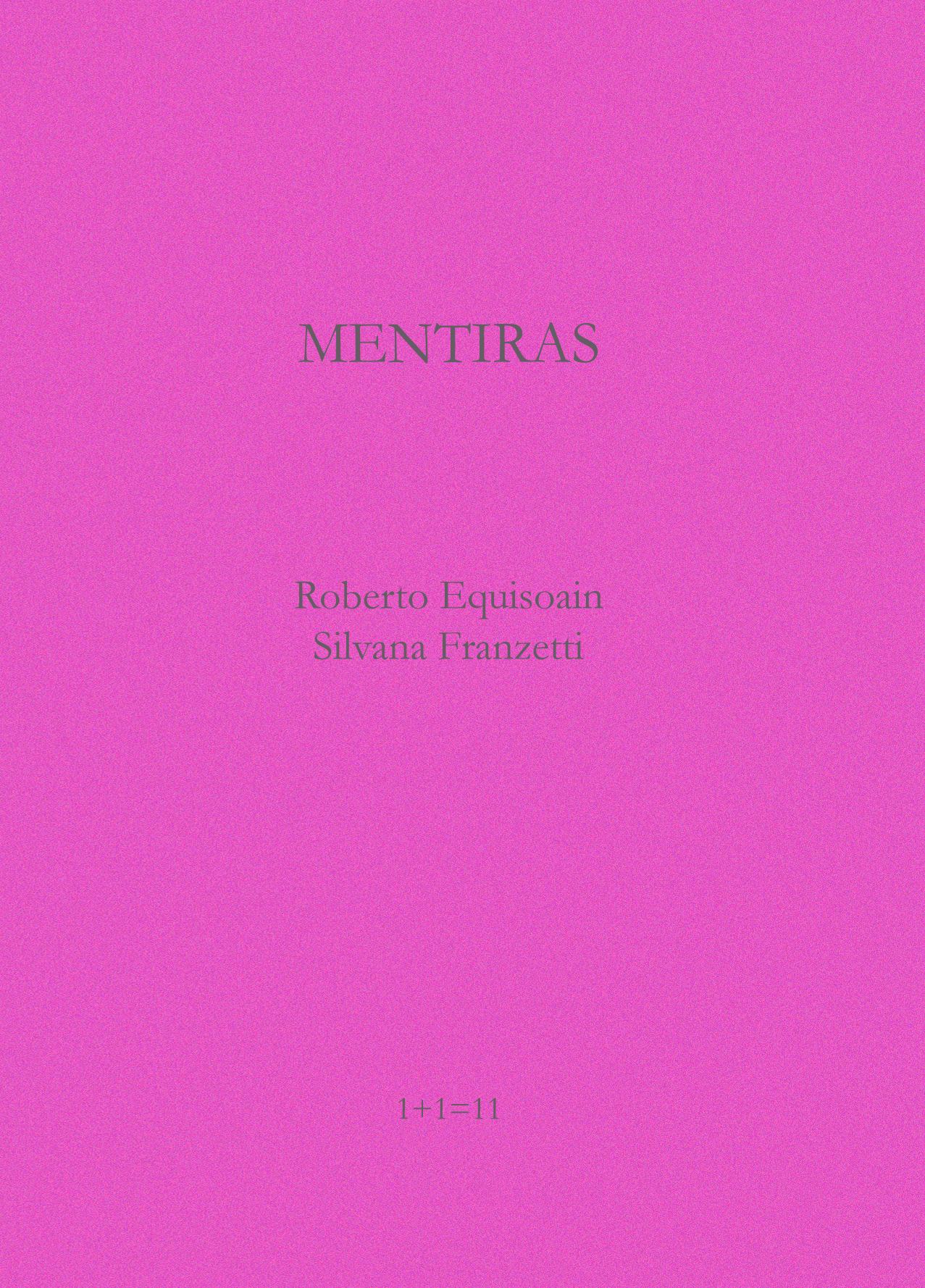 MENTIRAS
Primera edición: julio de 2010, 50 ejemplares
Poemas: Silvana Franzetti
Fotos y diseño: Roberto Equisoain
Edición: 1+1=11, 1+1=1
Con la colaboración: Siguaraya Galerie, Berlín
60 páginas
PVP: 10 €
Las mentiras son mecanismos, construcciones, como
las trampas para cazar animales. Esta idea hace
referencia a la reflexión del escultor Jorge Oteiza
de que el arte es una trampa, un cepo que intenta
atrapar el ser estético. Mentiras plantea la idea del
herror (escrito con h), del fallo que inevitablemente
se produce antes o después en el mecanismo de la
mentira. Muestra la necesidad humana de la creación
de engaños por medio del lenguaje y del arte para
atrapar una idea, algo irracional, inmaterial, quizá a
Dios.
MINNEMYSTIK, 25.-27. Juni 2010, Kunstfestival 48-Stunden-Neuköln, Video
Posted: May 10, 2010 Filed under: FILM/VIDEO, INFO/ARCHIVE Leave a commentMinnemystik (Mystic of Love)

25.-27. Juni 2010
Sex-Kino-Shop
Friedelstr. 49
12047 Berlin
Fr 19:00 — 22:00
Sa 19:00 — 22:00
So 12:00 — 18:00
Minnemystik is a videoart piece in loop that is meant to be watched in a private cabin of a sex shop.
Minnemystik, mystic of love, consists of a collection of texts by Christian mystic women, mixed with images of faces of people who are reaching orgasm. These texts were written in a moment of full ecstasy, of mystic vision. The pictures are also images of abandonment, of renunciation to reason.
BLABLABLABLA BLABLABLABLA BLA BLABLA BLA
Posted: May 9, 2010 Filed under: BOOKS/1+1=11 Editorial, INFO/ARCHIVE 1 Comment
Blablablabla Blablablabla bla Blabla Bla
Original Title: Universal Declaration of Human Rights
Editorial: produccionsescopeta
Translation and design: Roberto Equisoain
First edition: Mai 2010.
52 pages
ISBN: 978-84-936-3793-4
Blablablabla Blablablabla bla Blabla Bla is the translation of the 1948 Universal Declaration of Human Rights to Blablabla language.
The peculiarity of this book lies in that what is possible rests on the singularity of what has been erased. Once Blablabla spreads like a virus that does not resign itself to subvert or surpass the UN text: rather, it expands beyond its limits, infecting also title, author, editing and even the ISBN, making them disappear in the undifferentiated mass of blablablas.
In contrast with a language which, in its attempt to explain reality, is only able to reach a misinterpretation or, at best, a simplification, Blablabla takes precisely this simplification as its starting point, pushing it to the limits until reaching unintelligibility.
This does not imply, however, that Blablabla sacrifices meaning: as a playful game, Blablabla claims opacity and refuses to understand the World. In this book Blablabla is revealing in a way that countless discourses and elaborations have not been able to explain.
Blablablabla Blablablabla bla Blabla Bla
Título original: Universal Declaration of Human Rights
Editorial: produccionsescopeta
Traducción y diseño: Roberto Equisoain
Primera edición: Mayo 2010.
52 páginas
ISBN: 978-84-936-3793-4
Blablablabla Blablablabla bla Blabla Bla es la traducción de la Declaración Universal de los Derechos Humanos de 1948 al lenguaje blablablá.
La singularidad de este libro reside precisamente en que ha borrado todo rastro de singularidad, una vez que el blablablá se extiende como un virus que no se conforma con apoderarse de todo grueso del texto, sino que se expande más allá de sus márgenes, infectando también al título, el autor, la editorial o incluso el ISBN y haciéndolos desaparecer en la masa indistinguible de blablablás.
Frente a un lenguaje que en su intento de explicar la realidad lo que consigue es malentenderla o, en el mejor de los casos, simplificarla, el blablablá toma precisamente esa simplificación como punto de partida, llevándola al extremo hasta alcanzar lo ininteligible. Pero ello no significa que renuncie al sentido: como juego lúdico, el blablablá defiende la opacidad y se niega a entender el mundo, lo cual no significa que ocasiones, como en este libro, el blablablá resulte mucho más revelador acerca una cierta situación de los derechos humanos que una infinidad de discursos y palabras no han sido capaces de dar a entender.
.
 robertoequisoain.com